Author: Dr. Sergey Terushkin, MD, FACS
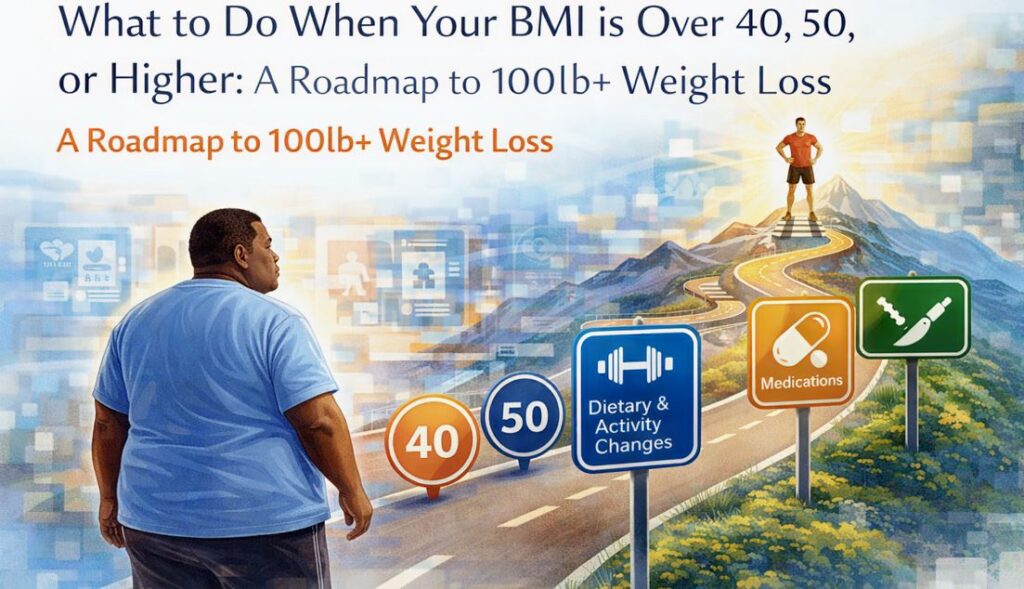
When your Body Mass Index (BMI) reaches 40, 50, or even 60, weight loss is no longer just an aesthetic goal—it is a medical priority. At these levels, often termed extreme or “super” obesity, the health risks for heart disease, stroke, and over 13 types of cancer increase dramatically.
At Goal BMI in Brooklyn, Dr. Sergey Terushkin, MD, FACS, specializes in treating patients who need to lose 100 pounds or more. While diet, exercise, and medical weight loss drugs have their place, surgery is currently the only treatment that consistently achieves and maintains substantial weight loss for those in the 40+ BMI range.
A BMI of 40 (Class III obesity) is the primary threshold at which surgery becomes the gold standard recommendation. At this stage, the likelihood of achieving a healthy weight through traditional dieting alone is less than 1%.
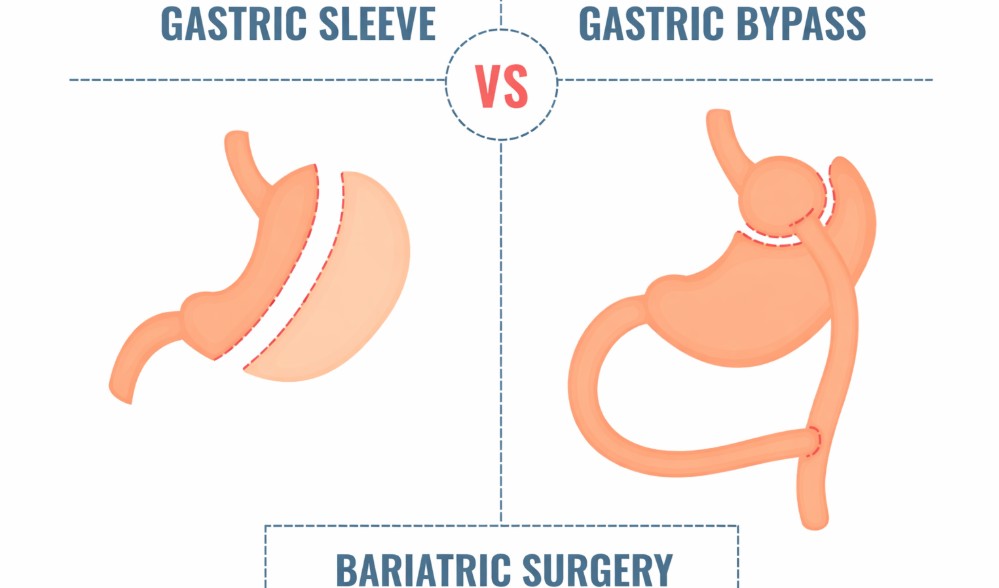
For most patients at Goal BMI, the Gastric Sleeve (laparoscopic sleeve gastrectomy) is the procedure of choice.
Patients with a BMI over 50 face higher surgical risks but also have the most to gain from intervention. Dr. Sergey Terushkin uses advanced laparoscopic and robotic technology to ensure safety even in complex cases.
For patients with a BMI over 60, Dr. Terushkin may recommend a two-stage surgical plan.
In the New York area, a BMI over 40 (or over 35 with health issues like sleep apnea or Type 2 diabetes) is widely recognized as a medical necessity for surgery.
To help patients understand the journey ahead, Dr. Sergey Terushkin provides clarity on the most critical aspects of high-BMI surgical intervention.
Modern minimally invasive techniques have made bariatric surgery safer than ever, with risks now lower than common gallbladder or hip replacement procedures. Patients with a BMI over 50 generally lose 100 to 200 pounds or more, with Gastric Sleeve patients typically losing 50% to 60% of their excess body weight.
While GLP-1 medications are effective for moderate weight loss, they often lead to weight regain when discontinued. For those requiring a 100lb+ reduction, surgery provides a more durable and permanent metabolic change.
Thanks to laparoscopic techniques, most patients stay only one night in the hospital and return to light activity within 1 to 2 weeks. It is important to note that massive weight loss often leads to excess skin; Dr. Terushkin is an expert in Panniculectomy to address these functional issues once weight stabilizes.
About the Author: Dr. Sergey Terushkin, MD, FACS
Dr. Sergey Terushkin is a board-certified general and bariatric surgeon with more than 15 years of experience. Having completed a prestigious fellowship at the Cleveland Clinic, he is a leading authority on minimally invasive surgery in New York. He is dedicated to helping patients with “super” obesity reclaim their lives safely.
Don’t let your BMI define your future. Whether you are at 40, 50, or higher, Dr. Sergey Terushkin and the Goal BMI team are ready to guide you.
Would you like me to help you schedule a virtual or in-person consultation at our Court Street office to evaluate your medical eligibility for surgery?
Medical Disclaimer
Bariatric surgery is a life-altering medical intervention. Long-term success requires permanent healthy changes to your diet and regular physical activity. All surgeries carry risks, including infection and blood clots. Consult with Dr. Sergey Terushkin to discuss the specific risks and benefits based on your medical profile.
Our Philosophy Is Providing Surgical Excellence By Combining Cutting Edge Technology And Individualized Patient Care. A Few Of The Most Commonly Performed Procedures Include Laparoscopic Gastric Banding, Laparoscopic Sleeve Gastrectomy, Laparoscopic Gallbladder Surgery, And Laparoscopic Hernia Repair.